

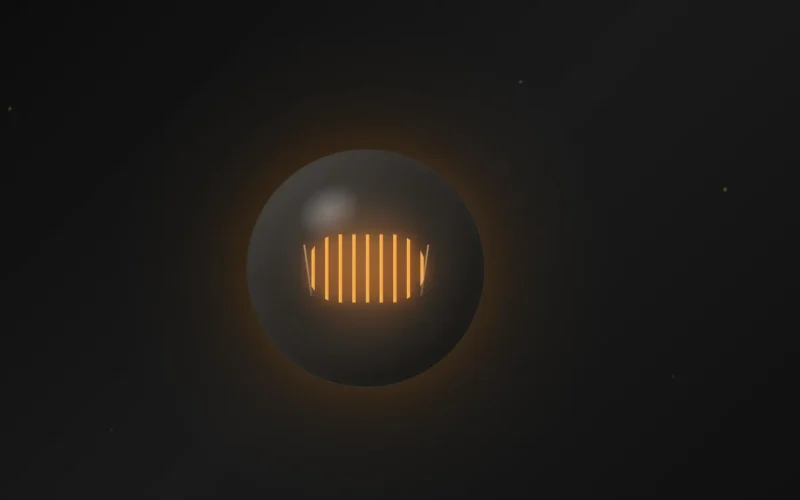
The LED in my desk lamp died after 18 months. I pulled an old incandescent from a closet, screwed it in, and it worked immediately. That moment reminded me why the humble tungsten bulb filament still matters in 2026—and why calling it “obsolete” is premature.
What is a tungsten bulb filament?
A tungsten bulb filament is the thin coiled wire inside incandescent bulbs that glows white-hot when electricity passes through it. Made from tungsten metal, it withstands temperatures exceeding 3,000°C—hot enough to produce visible light through incandescence. Despite the push toward LEDs, this simple component still dominates niches where light quality, smooth dimming, and upfront cost matter more than raw efficiency.
In this guide, I’ll break down exactly how this technology works, where it beats modern alternatives, and what you should check before buying one.
Table of Contents
What Is a Tungsten Bulb Filament?
The tungsten bulb filament is the heart of every incandescent light bulb. It’s a coiled wire—often double-coiled for strength—made from tungsten metal. Manufacturers chose this material because it withstands temperatures over 3,000°C without melting.
Most filaments measure between 0.5 and 1.0 millimeters in diameter when coiled, though the raw wire itself is far thinner than a human hair. When electrical current flows through it, resistance generates heat. At roughly 2,500°C to 3,000°C, the wire emits visible light. This process is called incandescence.
Thomas Edison’s early bulbs used carbon filaments. They burned out quickly and were extremely fragile. Tungsten replaced carbon in the early 1900s because of its incredibly high melting point—3,422°C according to NIST standards. That property alone made the tungsten bulb filament the standard for general lighting for over a century.
The manufacturing process is surprisingly complex. Raw tungsten powder gets pressed into bars, heated in hydrogen furnaces, and then drawn through diamond dies into wire as thin as 20 micrometers. This wire is then coiled around a mandrel, heated again to set the shape, and finally mounted between support wires inside the glass envelope.
Even today, millions of incandescent bulbs remain in service worldwide. They’re inside ovens, reptile enclosures, vintage lighting fixtures, and film studios. And in every case, the filament itself determines the bulb’s lifespan, color temperature, and efficiency.
If you’re comparing lighting technologies, our guide to our laser marking machine factory guide explains efficiency ratings in detail.
How Does a Tungsten Filament Work?
Understanding the physics helps you troubleshoot failures and choose the right bulb for the job.
The Basic Physics
Electricity enters the bulb through the base and flows into the coiled wire. The tungsten bulb filament resists this flow. Resistance creates heat. And heat, at extreme temperatures, produces light.
It’s not efficient. About 95% of the energy becomes heat. Only 5% becomes visible light. That’s why a 60-watt incandescent bulb outputs roughly the same brightness as a 10-watt LED.
But efficiency isn’t everything. The filament produces a continuous spectrum of light. That means smooth, even color rendering across all wavelengths. LEDs use phosphors to approximate this spectrum. The difference is visible in color-critical applications.
Why Tungsten Specifically?
Tungsten isn’t the only metal with a high melting point. Rhenium and osmium also work. But tungsten is cheap, abundant, and machinable. Manufacturers can draw it into extremely thin wires—sometimes just micrometers thick.
Over time, engineers learned to coil the wire into tight helices. This reduces heat loss and increases efficiency slightly. Some high-end bulbs use a coiled-coil design: a helix wrapped into a larger helix. It sounds simple. It took decades to perfect.
Tungsten also evaporates slowly. At 2,800°C, atoms gradually flake off the surface and deposit on the inner glass. That’s the blackening you see on old bulbs. Halogen bulbs solve this with a chemical regeneration cycle—but the core material is still tungsten.
Tungsten Bulb Filament vs LED: What Buyers Should Know
I’ve replaced dozens of bulbs in my home lab and office over the years. Here’s what actually matters when you compare these technologies.
Lifespan Reality Check
LEDs last 15,000 to 50,000 hours. A standard incandescent burns for 1,000 to 2,000 hours. On paper, LED wins.
But lifespan depends on use case. Bulbs in rarely-used closets or attics can last a decade. And when they fail, they fail cheaply. You replace a $1 bulb. LED drivers and chips sometimes die before the diode itself, leaving you with a $10 paperweight.
I’ve had three LED bulbs fail within two years. Every incandescent I’ve installed in my porch fixture—subject to extreme cold—has outlasted its LED replacement. Cold kills LED electronics. The filament itself doesn’t care about temperature swings.
Light Quality and Color Rendering
Here’s where this technology genuinely shines. Incandescent bulbs score 100 on the Color Rendering Index (CRI). That’s perfect color accuracy.
Most consumer LEDs score 80–90 CRI. Premium ones hit 95. But perfect 100 CRI from this technology costs pennies. For photographers, artists, and medical exam rooms, that difference matters.
Dimming behavior is another win. A tungsten source dims smoothly to a warm glow. LEDs often flicker, drop out at low voltages, or require expensive dimmer switches. If you’ve ever heard buzzing from a dimmed LED, you know the frustration.
For a deeper dive into color metrics, read our article on how we test technical specs on industrial hardware.
Applications Where Tungsten Still Wins
Don’t let efficiency ratings fool you. The tungsten bulb filament remains essential in specific environments:
Oven Lighting: LEDs hate heat. Oven bulbs regularly see 200°C+. Incandescent bulbs thrive here because the filament operates at temperatures the LED electronics simply cannot survive.
Dimming Circuits: Old rotary dimmers and TRIAC switches were built for resistive loads like these filaments. LEDs often need retrofits. I’ve tried dimming cheap LEDs on old switches. The results were strobe-like flickering and early burnout.
Photography and Film: Studios use this lighting for skin-tone accuracy. It’s easier to color-correct tungsten light than to fix LED color spikes. Many cinematographers still prefer the warm 3200K glow for interview setups.
Reptile and Pet Enclosures: These setups need heat AND light. The filament provides both simultaneously.
Vintage and Decorative Fixtures: Edison bulbs with exposed coils are aesthetic features, not just light sources. The warm amber glow is impossible to replicate accurately with LEDs.
Medical Examination Lamps: Some dermatology and surgical lamps still prefer incandescent bulbs for color accuracy and zero flicker. Medical lighting requirements are strict—see our breakdown of technology compliance and safety standards.
Common Problems and How to Fix Them
Even simple technology breaks. Here’s how to diagnose issues with your tungsten bulb filament.
Burnout and Blackening
When a filament burns out, you’ll see a dark spot on the glass. That’s evaporated tungsten. The wire itself thins until it snaps.
You can’t fix a broken filament. But you can slow the process:
- Use bulbs rated for your voltage. Overvoltage kills filaments fast.
- Install shock-absorbing fixtures. Vibration accelerates fatigue.
- Choose halogen bulbs when possible. The halogen cycle redeposits tungsten back onto the wire, roughly doubling lifespan.
Voltage Sensitivity
A tungsten bulb filament designed for 120V will burn out in weeks on 130V. Voltage spikes are lethal.
If you live in an area with unstable power, use surge-protected fixtures or switch to 130V “rough service” bulbs. They trade slightly lower brightness for dramatically longer life.
Key Takeaways
- A tungsten bulb filament is a coiled tungsten wire that glows white-hot to produce natural, full-spectrum light.
- It scores perfect 100 CRI color rendering and dims smoothly—advantages LEDs still struggle to match.
- Lifespan is shorter than LED (1,000–2,000 hours), but replacement cost is minimal and failures are predictable.
- Critical applications like ovens, photography, medical lamps, and vintage fixtures still depend on tungsten technology.
- Protect your investment by matching bulb voltage to your supply and using halogen variants when possible.
FAQ
Q: What is a tungsten bulb filament made of?
A: It’s made from tungsten metal, chosen for its extremely high melting point of 3,422°C. This allows the filament to glow white-hot without melting.
Q: Why did tungsten replace carbon in light bulbs?
A: Carbon filaments burned out quickly and were fragile. Tungsten is stronger, lasts longer, and can operate at higher temperatures for brighter, more reliable light.
Q: Are tungsten bulbs banned?
A: Many countries have phased out general-purpose incandescent bulbs for energy efficiency. However, specialty tungsten bulb filament products—like oven bulbs, rough service bulbs, and decorative Edison bulbs—remain legal and widely available.
Q: Can I replace a tungsten bulb with an LED?
A: Usually, yes. But not always. Ovens, enclosed fixtures without airflow, and circuits with old dimmers often require tungsten bulbs. Check fixture ratings before swapping.
Q: How do I make a tungsten bulb filament last longer?
A: Use the correct voltage, minimize vibration, and consider halogen bulbs. Halogen bulbs use the same tungsten bulb filament but recycle evaporated atoms back onto the wire, roughly doubling lifespan.
