

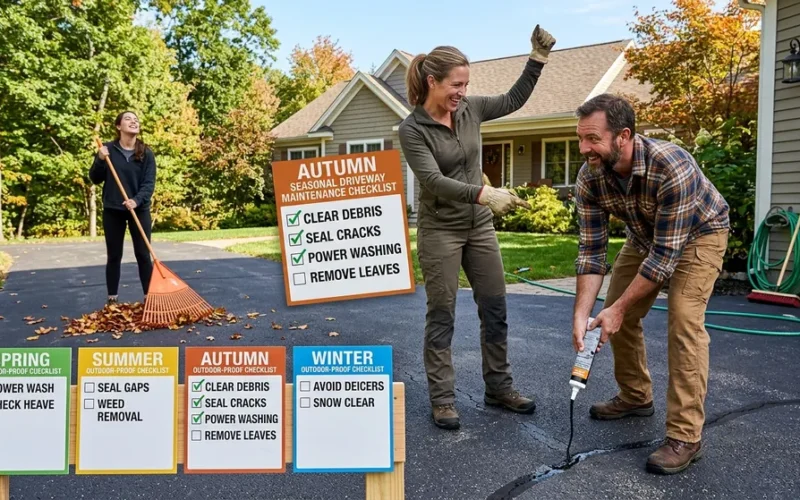
For Seasonal Driveway Maintenance Checklist your driveway quietly absorbs everything the year throws at it. Freezing temperatures crack it open, summer heat softens and warps it, and autumn leaves sit on it collecting moisture for weeks. I have maintained driveways across three different properties over the past eleven years, and the single most valuable thing I learned is that small seasonal efforts prevent enormous repair bills.
This seasonal driveway maintenance checklist with spending fortune gives you a clear, honest, and experience backed guide for every season of the year. Follow it consistently and your driveway will outlast those of your neighbors by a decade or more.
Why Spring Is the Most Important Season to Inspect Your Driveway?
After months of freeze and thaw cycles, snow plows, and road salt runoff, spring reveals all the damage your driveway quietly absorbed. Catching problems now costs a fraction of what it costs to fix them after a second winter compounds the damage so focus Seasonal Driveway Maintenance Checklist.
Integrate your own experience into the 2026 Seasonal Driveway Maintenance Checklist, the goal is to show the reader the why and the consequences behind the tasks.
A Practical Walkthrough for Your Spring Driveway Assessment
- Walk every inch of the surface slowly in good daylight and note every crack, chip, or raised section you find.
- Pressure wash the entire surface to remove embedded salt, sand, and winter grime before you evaluate anything.
- Check where the driveway meets the garage floor or curb since these joints crack first and let water underneath.
- Look at the edges of the driveway where frost heave commonly lifts and separates the base from the soil.
- Let the surface dry for a full day before applying any repair product or sealant.
Filling Cracks the Right Way Before They Get Worse?
A crack under a quarter inch wide is a quick fix with a bottle of liquid crack filler and a putty knife. I handled a long shallow crack along my concrete apron last April in under twenty minutes, and it held through the following winter without any reopening. Wider cracks need a foam backer rod pushed in first to give the filler material something to bond against.
- Clean inside the crack with a wire brush and blow out loose debris before applying anything
- Overfill slightly and smooth with a putty knife so settling lands flush with the surface
- Give it a full 24 hours of cure time before allowing foot traffic and 48 hours before vehicles
How to Protect and Seal Your Driveway During the Summer Months?
Summer is your best window for sealing because the surface is warm, dry, and fully cured from spring repairs. Both asphalt and concrete benefit from sealing, though the products and Seasonal Driveway Maintenance Checklist techniques differ. Getting Your Driveway Surface Ready Before You Open Any Sealant,
- Degrease any oil or fuel stains with a commercial degreaser scrubbed in with a stiff bristle brush.
- Rinse thoroughly and allow at least 24 hours of complete drying time before sealing.
- Apply sealant only when the temperature is between 50 and 90 degrees Fahrenheit with no rain in the 48 hour forecast.
- Spread the first coat thin and even using a long handled squeegee moving in straight parallel passes.
- Allow 6 to 8 hours between coats and block all traffic for a minimum of 48 hours after the final coat.
Removing Oil Stains Before They Get Sealed In Permanently
- Pour a commercial degreaser or a baking soda paste directly onto the stain and let it sit for 15 minutes
- Scrub aggressively with a stiff brush in a circular motion working from the outer edge inward
- Rinse with a pressure washer on a medium setting to fully lift the dissolved material from the pores
Everything You Should Do to Your Driveway Before Winter Arrives
Fall is your last opportunity to protect the driveway before freezing temperatures make repairs impossible and damage irreversible. This is the season where homeowners who pay attention get rewarded Seasonal Driveway Maintenance Checklist the following spring.
The Pre Winter Driveway Protection Routine That Actually Works
- Clear fallen leaves from the surface every few days since wet leaves trap moisture and stain concrete.
- Inspect and refill any concrete expansion joints where the caulk or filler has dried out or pulled away.
- Apply a penetrating concrete sealer before temperatures drop below 50 degrees so it cures properly.
- Trim overhanging branches that could drop limbs onto the surface or funnel ice melt water across it.
- Verify that all nearby downspouts and gutters direct water away from the driveway rather than across it.
Professionals at This Old House consistently note that fall sealcoating Seasonal Driveway Maintenance Checklist delivers better adhesion and longer protection than spring applications because the surface is fully warm and porous enough to absorb product deeply before the cold sets in.
Smarter Ways to Handle Snow and Ice Without Damaging Your Driveway
Most driveway damage attributed to winter weather is actually caused by the products homeowners use to fight that weather. Rock salt is the single biggest offender, and switching away from it makes a measurable Seasonal Driveway Maintenance Checklist difference over time.
Snow Removal Habits That Protect the Surface All Season Long
- Use a plastic shovel rather than a metal one since metal edges gouge and scratch both asphalt and concrete
- Shovel within an hour of snowfall when possible so you are moving light powder instead of packed ice
- Apply calcium chloride or magnesium chloride ice melt which works at lower temperatures and causes far less surface damage than rock salt
- Never use sodium chloride on sealed, stamped, or decorative concrete since it causes a flaking damage called spalling
Four Things You Should Never Do to Your Driveway in Winter
- Never use a metal ice chipper or pick directly on the surface
- Never pile shoveled snow against the driveway edges where it settles into and erodes the base
- Never leave pooled water to refreeze repeatedly in the same low spot without addressing the drainage issue
- Never apply rock salt in heavy quantities thinking more Seasonal Driveway Maintenance Checklist product means faster melting since it primarily means more surface damage
What Eleven Years of Driveway Ownership Taught Me About Consistent Care?
The year I skipped fall maintenance on my second property was an expensive lesson. The following spring revealed three wide cracks near the garage apron and a section of edge heaving that required Seasonal Driveway Maintenance Checklist professional leveling. That repair bill was over four times what proper fall maintenance would have cost.
The pattern I have followed since then is simple. Two hours each spring, two hours each summer, two hours each fall, and smart product choices each winter. That eight hour annual investment has kept every Seasonal Driveway Maintenance Checklist I have maintained in excellent condition without a single major repair in the past seven years.
FAQs
How often does an asphalt driveway actually need to be resealed?
Every two to three years is the standard recommendation for asphalt of Seasonal Driveway Maintenance Checklist. If you notice the surface fading from black to grey, that is a reliable visual signal that sealing is overdue.
Is it safe to use any ice melt product on a freshly sealed driveway?
Stick to calcium chloride or magnesium chloride on Seasonal Driveway Maintenance Checklist sealed surfaces. Rock salt and potassium chloride can break down the sealer and accelerate surface deterioration significantly.
What is the earliest sign that a driveway needs professional repair rather than DIY patching?
When cracking covers more than a quarter Seasonal Driveway Maintenance Checklist of the total surface area or cracks run deeper than an inch, professional resurfacing or full replacement is worth getting a quote for.
Does driveway sealing work on concrete the same way it works on asphalt?
The purpose of Seasonal Driveway Maintenance Checklist is the same but the products differ. Concrete uses penetrating sealers or acrylic coatings while asphalt uses coal tar or asphalt emulsion products. Never apply an asphalt sealer to concrete.