

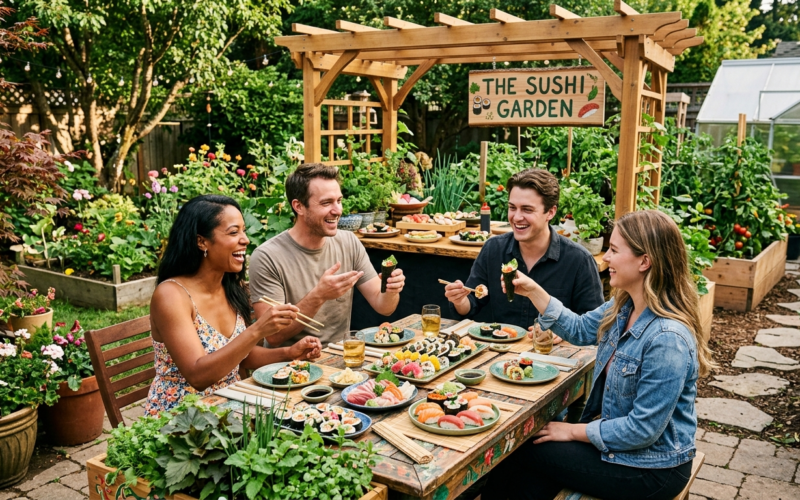
The idea of a sushi garden sounds like something belonging to a culinary school courtyard or a high-end restaurant patio. In reality, growing the core plants behind your favorite rolls and nigiri is entirely achievable in a standard backyard, a generous balcony, or even a well-lit kitchen shelf. The ingredients that define sushi shiso, wasabi, daikon, shungiku, myoga, and more are not exotic in their growing requirements. They are just unfamiliar to most Western gardeners.
This is a practical guide to building possible and maintaining a productive sushi garden, covering what to actually grow, where the conventional wisdom gets things wrong, and how to harvest and use these plants at their peak.
Why a Dedicated Sushi Garden Makes Sense Beyond the Novelty
There is a real economic and culinary argument for growing your own Japanese kitchen garden. Shiso, also called perilla or beefsteak plant, sells for several dollars per small bunch at specialty stores of sushi garden, wilts quickly after purchase, and is almost never available at standard supermarkets in most regions. Growing it yourself means having fresh leaves throughout the growing season at essentially zero ongoing cost.
Wasabi — the real thing, not the green-dyed horseradish most restaurants serve is one of the most expensive crops per kilogram on the planet. It is also genuinely difficult to grow at scale. But a small home setup with the right conditions can produce enough for personal use, and the process of growing it is deeply satisfying in a way that growing ordinary vegetables rarely is.
The Core Plants of a Functional Sushi Garden
Shiso — The Backbone of the Japanese Herb Garden
Shiso comes in two main varieties: green (ao shiso) and red (aka shiso). Green shiso is the one most commonly associated with sushi service, used as a bed for sashimi and as a wrapper for hand rolls. Red shiso goes into pickled plum (umeboshi) preparations and adds color and flavor to vinegars and drinks.
Both varieties grow readily from seed and behave similarly to basil in their requirements warmth, good drainage, consistent moisture, and protection from strong cold winds. Shiso is frost-sensitive and self-seeds prolifically once established, which means that after your first season you will likely never need to buy seeds again. Harvest individual leaves as needed, or cut the plant back to encourage denser bushy growth.
Daikon — The Root That Changes Everything
Daikon radish is the large, white, mildly peppery root used in many sushi preparations pickled as takuan, finely shredded as tsuma alongside sashimi, and grated as daikon oroshi to accompany tempura. Growing daikon requires loose, deep, stone-free soil. Compact or rocky ground produces forked, stunted roots that are frustrating to work with in the kitchen.
Sow seeds directly into prepared beds in late summer for a fall harvest, or in early spring for a late spring harvest. Daikon matures quickly — most varieties are ready in 50 to 70 days. The greens are also edible and excellent stir-fried, so nothing is wasted.
Wasabi — Difficult, Rewarding, and Worth Every Attempt
Real wasabi (Wasabia japonica) is native to the cool, shaded stream banks of Japanese mountain regions. It wants consistently cool temperatures, bright indirect light, high humidity, and moving water in its ideal form. This does not mean you cannot grow it, it means you need to think carefully about placement.
In most climates, wasabi grows best in a shaded raised bed or large container, positioned under deciduous trees that provide summer shade and winter light. Keep it consistently moist but never waterlogged. Growth is slow it takes around two years to produce a harvestable rhizome, but the leaves and stems are edible and flavorful throughout the growing period. Grate the rhizome fresh immediately before use; the heat and aroma dissipate within minutes of grating.
Myoga — The Ingredient Most Gardeners Have Never Heard Of
Myoga is a ginger relative native to Japan, grown for its flower buds rather than its rhizome. It is used thinly sliced as a garnish for miso soup, chilled tofu, and certain sushi preparations, delivering a distinctive floral-ginger flavor that has no real substitute.
From a growing perspective, myoga is remarkably easy for sushi garden. It is cold-hardy, shade-tolerant, and spreads slowly over time from underground rhizomes. Plant it in a semi-shaded spot, water regularly, and harvest the emerging buds at ground level when they appear in late summer. Once established, a myoga planting requires almost no maintenance and returns reliably each year.
Setting Up the Physical Space
Zoning Your Garden by Water and Light Needs
A well-designed sushi garden clusters plants by their environmental requirements rather than by type. Wasabi and myoga belong in the cool, shaded, consistently moist zone typically the north-facing or tree-shaded corner of your garden. Shiso, daikon, and cucumbers for quick-pickled sunomono belong in the sunny, well-drained zone.
This zoning approach reduces your maintenance workload significantly because each cluster of plants receives the same watering schedule and sun exposure to the sushi garden. Mixing high-water plants with drought-tolerant ones in the same bed creates constant compromises that usually result in at least one group performing poorly.
Container Options for Small Spaces
If outdoor space is limited, a surprisingly complete sushi garden fits into containers. Shiso does well in any pot with drainage holes and at least 6 inches of depth. Daikon requires a deep container at least 18 inches to allow root development. Wasabi works reasonably in a large glazed pot kept in a cool shaded spot with daily misting during warm weather in sushi garden. Myoga can be kept in a wide, shallow trough in a shaded corner.
Harvesting and Using What You Grow
- Harvest shiso leaves in the morning before heat builds, and store them stem-down in a small glass of water on the counter, similar to fresh basil
- Pull daikon when shoulders are visible above the soil surface and the root feels firm waiting too long makes the interior pithy and less pleasant raw
- Grate wasabi immediately before serving using a fine sharkskin grater or microplane pre-grated wasabi loses its volatile compounds within 15 minutes
- Harvest myoga buds when they are plump and tightly closed once the bud opens into a flower, the eating quality declines sharply
Quick Pickling From the Sushi Garden
One of the most rewarding aspects of a sushi garden is the ability to make your own tsukemono Japanese pickles. Quick-pickled daikon, cucumber, and shiso transform fresh garden produce into the bright, acidic counterpoints that make sushi meals balanced and satisfying. A basic rice vinegar, salt, and sugar brine made and used the same day produces tsukemono that bears no resemblance to the commercial pickled ginger or plastic-tasting daikon available in most grocery stores.
Experiment with thin-sliced daikon in seasoned rice vinegar for a few hours at room temperature. Add red shiso leaves to the brine for color and a floral edge. The results are immediately usable and genuinely impressive.
Seasonal Planning for a Year-Round Sushi Garden
With thoughtful planning, a sushi garden can produce usable ingredients across most of the year in temperate climates. Daikon covers spring and autumn. Shiso is a summer annual that peaks midsummer. Myoga harvests arrive in late summer and early autumn. Wasabi provides leaves and stems almost year-round in mild climates and produces its prizes rhizome on a two-year cycle.
Growing a small amount of winter daikon under row cover extends the fresh ingredient season well into early winter in most regions. Preserved and pickled ingredients from summer harvests bridge the gap through the coldest months.
For detailed cultivation protocols and variety selection specific to Japanese culinary herbs in sushi garden, the resources maintained by the Herb Society of America provide peer-reviewed growing guides that are directly applicable to building a productive sushi garden at home.
FAQs
Can I grow real wasabi in a warm climate?
It is challenging but not impossible. In hot climates, grow wasabi in deep shade with daily misting, in a cool spot that stays below 70°F as much as possible. Air conditioning vents or cool basement grow setups can work for small-scale production.
Is there a difference between green and red shiso for sushi use?
Yes. Green shiso is the standard for sushi garnishing and fresh applications. Red shiso is primarily used for pickling and coloring preparations like umeboshi. Both are worth growing, but green shiso is the one you will reach for most often at the sushi board.
How long does it take to get a harvestable daikon from seed?
Most daikon varieties are ready to harvest in 50 to 70 days from direct sowing. Summer varieties tend to be slightly faster; autumn varieties grown for storage can take closer to 70 days. Check the specific variety you select for accurate timing.
What can I substitute if myoga is hard to source as a plant?
Myoga plants are available from Japanese specialty nurseries and some online herb suppliers. If you cannot source a plant, the rhizomes can sometimes be found at Asian grocery stores and will sprout if planted immediately in moist, shaded soil.