

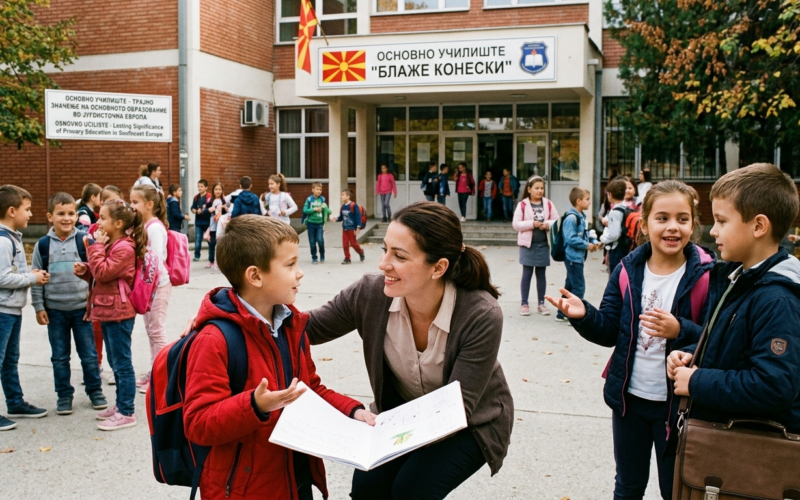
Education is among the most powerful forces that shape a society. Long before universities, research centers, or professional academies enter the picture, it is the earliest years of formal schooling that determine whether a child grows into a confident, curious, and capable adult. In Croatia and across much of Southeast Europe, this foundational stage of learning takes place in the osnovno uciliste — the primary school that forms the backbone of the entire educational system.
Understanding what an osnovno uciliste is, how it functions, and why it matters is essential for parents navigating school enrollment, researchers studying international education systems, and anyone with a stake in the future of these communities.
What Is Osnovno Uciliste? Meaning and Context?
Etymology and Geographic Scope
The phrase osnovno uciliste originates from South Slavic languages. Translated literally, it means “basic school” or “primary school.” The term is used in countries including Croatia, Slovenia, and Bosnia and Herzegovina to describe the first stage of compulsory, formal education for children.
In Croatia specifically, the institution is more commonly referred to as osnovna skola in everyday speech, though uciliste (meaning “place of learning”) appears in formal educational and administrative contexts. Regardless of terminology, both refer to the same foundational stage: the eight years of compulsory schooling that every child in Croatia must complete.
Where It Fits in the Broader System
Croatia’s educational journey begins with optional preschool (vrtic), followed by the compulsory osnovno uciliste stage. After completing primary education, students transition to srednja skola (secondary school), which includes gymnasia, vocational schools, and arts schools. Higher education follows at university level.
Primary education in Croatia is fully publicly funded. Public primary and secondary schools charge no tuition — families are responsible only for textbooks, meals, and basic supplies. There are currently approximately 940 primary schools operating across the country.
The Structure of Primary Education in Croatia
Two Distinct Phases
Osnovno uciliste education spans eight years and is divided into two clearly defined stages:
Lower Grades (Razredna nastava) — Grades 1 through 4: Children aged 6 to 10 are taught by a single class teacher throughout these foundational years. The focus is on developing core literacy, basic numeracy, social interaction, and general understanding of the world. Students remain in one classroom, building a stable and nurturing relationship with their teacher.
Upper Grades (Predmetna nastava) — Grades 5 through 8: From age 11 onward, students begin moving between classrooms, taught by subject specialists for each discipline. This shift mirrors the structure of secondary school and helps students develop independence, organizational skills, and subject-specific thinking.
The Academic Calendar
The school year in Croatia officially runs from September 1 to August 31, though students attend classes from early September through mid-June. The academic structure follows a semester format, with established holiday periods in autumn, winter, and spring. Each class group is designated by letter — Class A, Class B, Class C — and students typically remain with the same cohort throughout all eight years.
The Curriculum: What Students Learn?
The curriculum of osnovno uciliste is designed to deliver a broad, balanced education that equips young learners academically, artistically, physically, and socially.
Core Academic Subjects
- Croatian Language and Literature — Reading, writing, grammar, and literary analysis form the foundation of every student’s academic development.
- Mathematics — Arithmetic, geometry, algebra fundamentals, and logical reasoning are introduced progressively.
- Natural Sciences — Students study biology, chemistry, physics, and environmental studies as they move through the upper grades.
- History and Geography — Regional and world history alongside geographic literacy connect students to their cultural context and the wider world.
- Foreign Languages — English is typically the first foreign language, introduced as early as grade 1. A second language — often German, Italian, Spanish, or French — is offered from grade 4 onward.
Creative and Physical Development
- Arts and Music — Visual arts, music appreciation, and creative expression are integrated throughout the curriculum, recognizing their role in cognitive and emotional development.
- Physical Education — Sports, exercise, and health literacy contribute to students’ physical wellbeing and instill healthy habits from an early age.
- Religious Education — This is an elective subject, offered but not compulsory, reflecting Croatia’s respect for both faith and secular households.
21st-Century Skills and Digital Learning
Croatia has made significant investments in digitalizing its school system. Through the national CARNET initiative, thousands of schools have received computers, tablets, interactive presentation equipment, and improved connectivity. Over 1,300 primary, secondary, and arts schools were targeted for full digitalization, with teacher training and digital instructional material developed to match. When COVID-19 struck, digitally prepared schools were able to begin offering online classes within two days — a testament to the value of proactive infrastructure investment.
Teaching Methods and the Classroom Environment
From Traditional to Modern Pedagogy
Teachers in osnovno uciliste employ a spectrum of instructional approaches. Traditional classroom instruction — direct teaching, structured note-taking, examinations — remains present, but it is increasingly complemented by:
- Hands-on and project-based learning that connects academic subjects to real-world applications
- Group work and collaborative tasks that develop communication and teamwork skills
- Differentiated instruction that adapts lessons to individual student pace and learning style
- Digital tools and interactive platforms that make learning more engaging and accessible
The lower-grade classroom is designed as a nurturing environment where curiosity is encouraged, mistakes are part of learning, and every child’s voice is heard. Upper-grade teaching shifts toward subject expertise, preparing students for the intellectual demands of secondary school.
The Role of Teachers
Primary school teachers in Croatia are not merely conveyors of information — they are pivotal figures in a child’s social and emotional formation. In the lower grades especially, the class teacher serves as a second caregiver, building trust and a sense of safety that enables genuine learning. Good teachers create classrooms where students feel confident asking questions, attempting difficult tasks, and exploring ideas without fear of failure.
The Role of Parents and Community
Parents are active partners in the osnovno uciliste experience. Regular parent-teacher meetings, involvement in school events, and engagement with homework and reading at home all contribute meaningfully to a child’s academic outcomes. Schools in Croatia increasingly recognize that family engagement is not supplementary to education — it is integral to it.
Communities also contribute through local sponsorship of school activities, maintenance of facilities, and support for cultural and sporting programs. This collaborative ecosystem ensures that children receive consistent encouragement both inside and outside the classroom.
Challenges and the Path Forward
Navigating Modern Demands
Like primary education systems worldwide, osnovno uciliste faces real challenges. Integrating technology effectively across all schools — not just those in well-resourced urban areas — remains an ongoing effort. Inclusive education for students with special learning needs requires continued investment in specialist support staff and adapted teaching materials. Curriculum modernization, balancing traditional academic subjects with emerging competencies like coding, digital literacy, and critical media analysis, is an evolving conversation.
The Strong Foundation It Creates
Despite these challenges, the outcomes speak for themselves. Since primary school became mandatory in Croatia, the national literacy rate has reached nearly 99%. The overwhelming majority of children complete all eight years of osnovno uciliste, and a substantial portion go on to secondary education and beyond. Students who receive a strong primary education are measurably more likely to succeed academically, contribute economically, and participate positively in civic life.
Frequently Asked Questions
At what age do children in Croatia begin osnovno uciliste?
Children typically begin primary school at age 6 or 7. Before enrollment, children who have not attended a kindergarten program must complete a mandatory one-year preschool preparation program (predskola) that readies them for the school environment.
Is primary education in Croatia free?
Yes. Public primary schools in Croatia are fully funded by the state and charge no tuition. Families cover costs for textbooks, cafeteria food, student accommodation where applicable, and basic supplies. The state also provides thousands of scholarships annually and covers health insurance for students.
What happens after completing osnovno uciliste?
After finishing the eighth grade, students may enroll in srednja skola — secondary school. Options include academic gymnasia, vocational and technical schools, and arts schools. Secondary education is currently not compulsory, though there is political consensus that it should eventually become so.
How does osnovno uciliste compare to primary schools in other countries?
The osnovno uciliste model closely resembles elementary school systems across Europe. Its eight-year structure spanning ages 6 to 15 is longer than some national systems but aligns with the principle of providing a thorough foundational education before specialization begins. All study programs are aligned with the Bologna Process framework, ensuring compatibility with European educational standards.
For comprehensive data on Croatia’s education system, including curriculum frameworks and school statistics, visit the official Eurydice European Education Database.
